
Fiberglass Garage Door Insulation: Benefits, Options and Installation Considerations
Insulating a garage door can help moderate garage temperatures, reduce outside noise and make an attached garage more comfortable. This guide explains how fiberglass insulation works, how it compares with other materials and when professional garage door service may be needed.
The garage is often one of the most overlooked parts of a home's thermal boundary. A thin, uninsulated garage door can allow outdoor temperatures to influence the garage, especially during hot High Desert summers and cold winter nights. Adding insulation may improve comfort, but the material must be compatible with the door's design, weight capacity and operating system.
Why Garage Door Insulation Matters
A garage door is commonly one of the largest moving exterior components on a home. When the door is made from a single layer of steel, aluminum or wood, heat can move through the surface relatively quickly.
Insulation slows this heat transfer and may help keep the garage from becoming as hot or cold as the outdoors. The actual improvement depends on the door, the insulation material, air leakage around the perimeter and whether the garage walls and ceiling are insulated.
Attached Garages
An attached garage shares one or more walls, ceilings or entry doors with the living area. Moderating garage temperatures may reduce the temperature difference across these shared surfaces.
Working and Storage Spaces
Insulation may make a garage used as a workshop, exercise area or storage space more comfortable while helping protect temperature-sensitive belongings.
Benefits of Fiberglass Garage Door Insulation
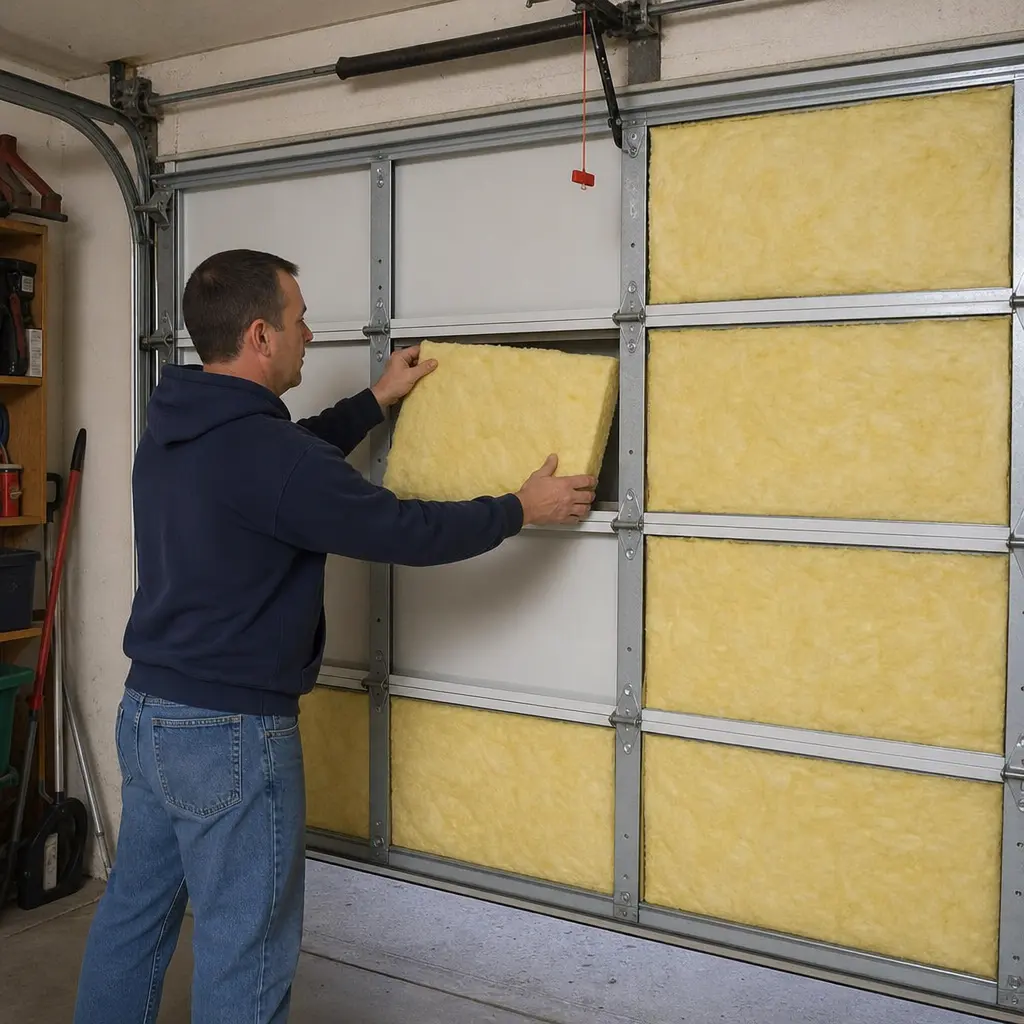
Fiberglass insulation is made from fine glass fibers that trap pockets of air. It is commonly available in rolls, batts or kits with vinyl or foil-facing materials.
Thermal Resistance
Fiberglass slows conductive heat transfer through a garage door. The amount of improvement depends on the thickness, density and quality of the installation.
Flexible Material
Fiberglass can be cut and fitted into many recessed door sections. Its flexibility may help it conform to cavities that are difficult to fill with rigid materials.
Affordable Option
Fiberglass is generally less expensive than many professionally applied insulation systems and is widely available in preassembled garage door kits.
Potential Noise Reduction
Fiberglass can absorb some sound vibrations and may reduce the hollow rattling associated with lightweight metal garage doors. It will not completely soundproof a garage, but it may make outside traffic and garage activity less noticeable.
Comparing Garage Door Insulation Materials
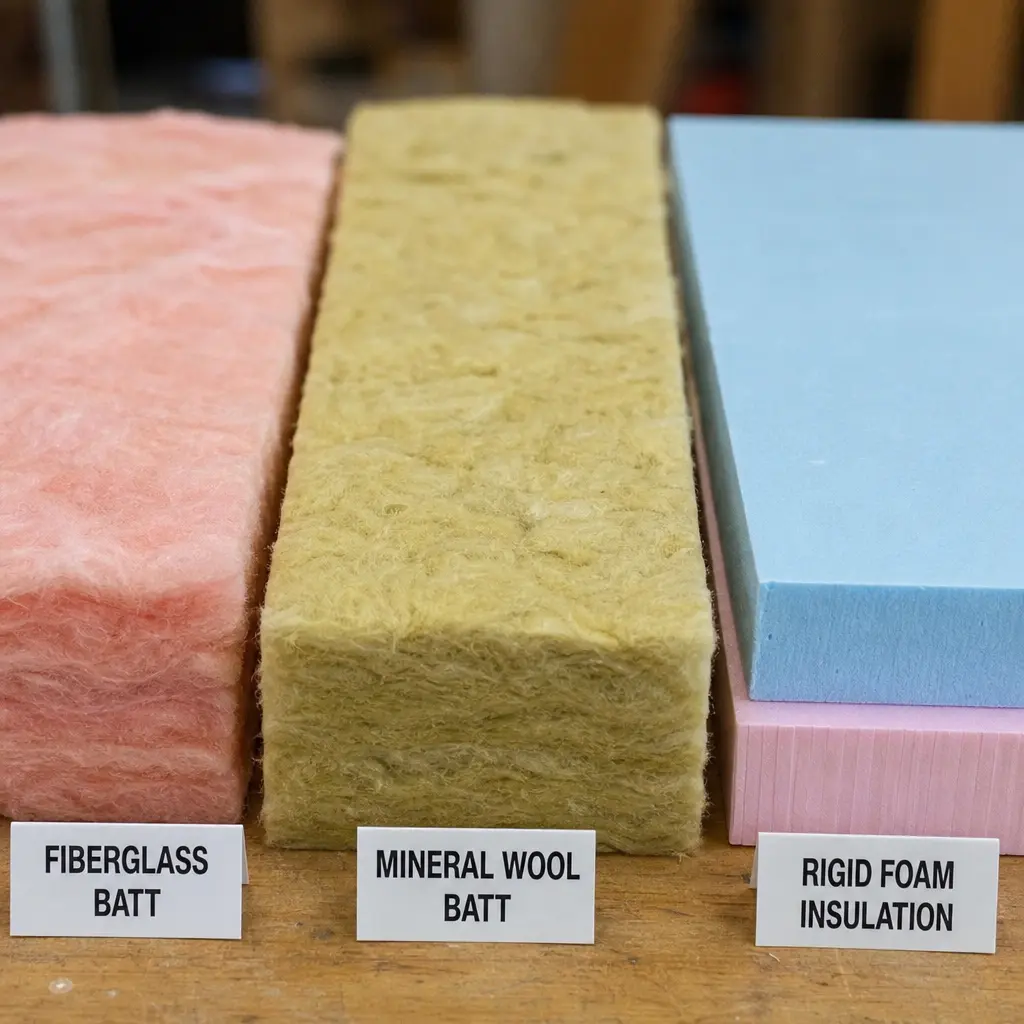
Fiberglass is only one available option. The best material depends on the door construction, local climate, desired insulation level and allowable added weight.
| Material | Potential Benefits | Considerations |
|---|---|---|
| Fiberglass Batts | Flexible, affordable and commonly available with protective facing. | Must be securely retained and protected from exposed fibers, moisture and damage. |
| Expanded Polystyrene | Lightweight, economical and available in rigid foam panels. | Requires careful cutting and may leave gaps around irregular panel shapes. |
| Polyisocyanurate Board | Provides relatively high thermal resistance for its thickness. | Foil-faced boards require accurate fitting and secure attachment. |
| Spray Foam | Can fill small gaps and provide strong air-sealing performance. | May add unwanted weight, complicate future repairs and should not be applied without confirming door compatibility. |
| Reflective Insulation | May reduce radiant heat gain when installed with an appropriate adjacent air space. | Performance depends heavily on installation details and should not be confused with high-R-value mass insulation. |
Understanding Garage Door R-Value
R-value measures resistance to conductive heat flow. In general, a higher tested R-value indicates greater resistance to heat transfer. However, R-value alone does not describe every aspect of garage door performance.
Air leakage around the bottom, sides and top of the door can have a major effect on comfort. Section joints, windows and gaps around the framing can also reduce the real-world performance of the complete door assembly.
- Confirm whether the rating applies to the insulation or complete door.
- Compare doors using similar testing methods.
- Inspect perimeter seals and section joints.
- Consider the climate and how the garage will be used.
- Account for windows and other uninsulated areas.
Best Practices for Garage Door Insulation Installation
A successful installation requires more than placing insulation inside each door section. The material must remain secure while the door opens, closes and bends through the curved portion of the track.
- Inspect the garage door for damaged panels, loose hardware or operational problems before adding insulation.
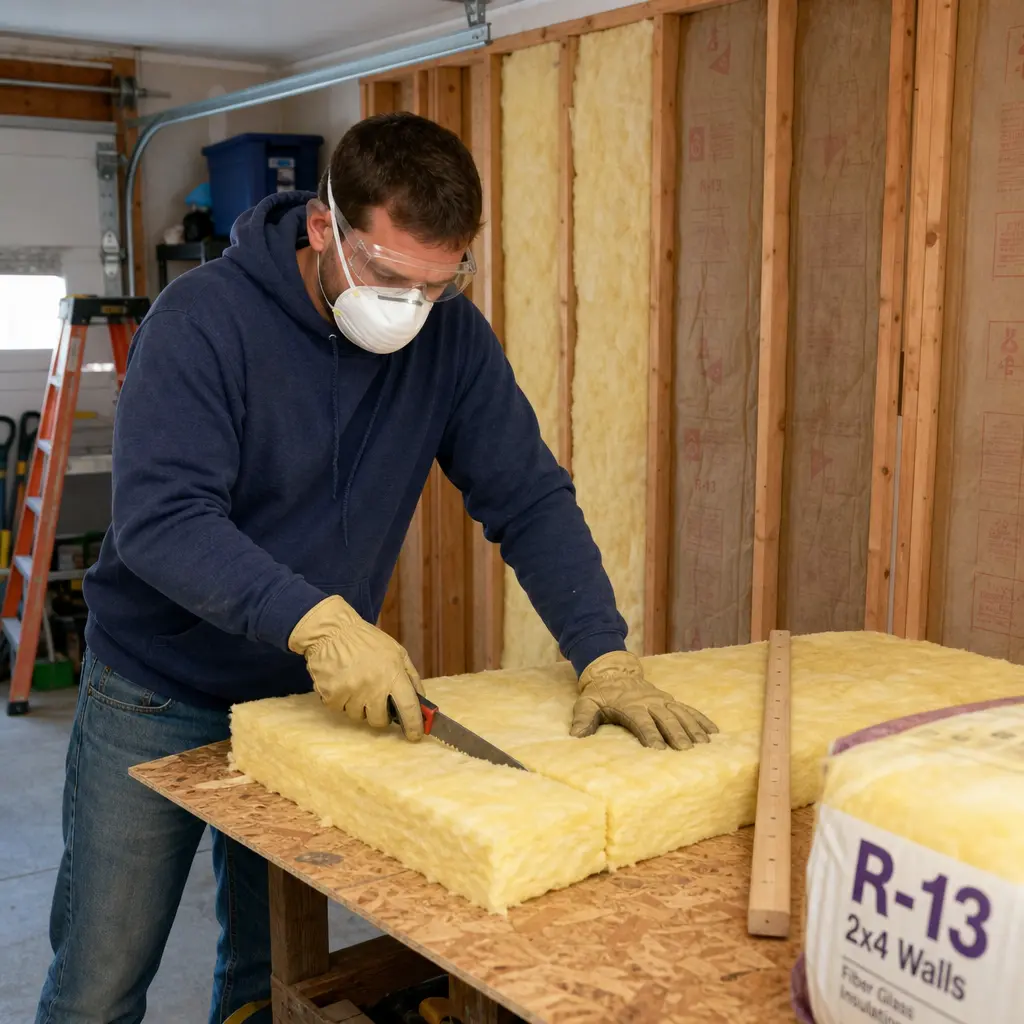
- Measure each recessed panel cavity individually because section dimensions may vary.
- Select an insulation system specifically intended for garage door use whenever possible.
- Keep insulation clear of hinges, rollers, cables, tracks and reinforcement hardware.
- Secure the insulation so it cannot sag, shift or fall while the door moves.
- Test the door balance and operation after installation without adjusting springs or cables yourself.
Protect Exposed Fiberglass
Fiberglass should not remain exposed where it can shed fibers, absorb contaminants or be damaged by tools and stored objects. Garage door insulation kits commonly include vinyl, foil or another protective facing.
Do Not Overcompress the Material
Fiberglass relies on trapped air for much of its insulating performance. Compressing thick material into a shallow cavity may reduce its effectiveness and place pressure on the panel covering.
Consider Moisture Conditions
Moisture-control requirements depend on climate, wall or door construction and whether the garage is heated. A facing material should not be positioned based on a universal rule without considering local conditions and manufacturer instructions.
Garage Door Weight and Balance Considerations
Every insulation system adds some amount of weight to the garage door. Even relatively lightweight materials can change the total weight enough to affect door balance, spring performance and opener operation.
Do Not Adjust Garage Door Springs Yourself
Torsion springs, extension springs, lift cables and bottom brackets are under substantial tension. Do not loosen, remove or adjust these parts. A trained garage door technician should inspect and rebalance the system when the door becomes heavy or difficult to operate after insulation is added.
Warning Signs After Adding Insulation
- The door feels significantly heavier than before.
- The door drops when partially opened.
- The opener strains, reverses or stops unexpectedly.
- The door moves unevenly or begins rubbing against the tracks.
- New squeaking, popping or grinding noises develop.
- Cables appear loose or misaligned.
Stop operating the door and schedule professional service if any of these symptoms appear.
Insulation Works Best With Proper Weather Sealing
Insulating the door panels may provide limited improvement when large air gaps remain around the door. Weather seals help reduce unwanted airflow, dust and exterior debris.
Bottom Weather Seal
The bottom seal closes the gap between the lowest section and the garage floor. Cracked, flattened or missing seals should be replaced with a compatible profile.
Side and Top Seals
Perimeter weatherstripping should contact the exterior face of the closed garage door without binding against the sections.
Check the Garage Entry Door
The door between an attached garage and the home should close and latch correctly. Do not alter required fire-protection features, and use weatherstripping that does not prevent proper closing.
Retrofit Insulation vs. a Factory-Insulated Garage Door
Adding insulation to an existing garage door can be a practical improvement, but it is not always equivalent to purchasing a new insulated door.
Retrofit Insulation May Be Appropriate When:
- The existing door is structurally sound.
- The panels have suitable recessed cavities.
- The added weight remains within system limits.
- A moderate comfort improvement is the goal.
- The budget does not allow full replacement.
A New Insulated Door May Be Better When:
- The existing door is damaged or badly worn.
- The panels are warped, rusted or cracked.
- Higher tested thermal performance is desired.
- The current door has recurring balance problems.
- You also want updated appearance or security.
Many factory-insulated doors use insulation bonded between exterior and interior steel layers. This construction may improve rigidity, durability and finished appearance compared with a basic retrofit kit.
Looking Beyond the Garage Door
The garage door is only one part of the garage enclosure. Homeowners who use the garage as a workspace may also need to consider the walls, ceiling, attic access, windows and shared surfaces next to the home.
Garage Walls
Wall insulation should match the framing depth and applicable local building requirements. Common 2-by-4 and 2-by-6 walls can accommodate different insulation thicknesses, but the correct R-value varies by climate zone and construction assembly.
Garage Ceiling
Ceiling insulation may be especially important when a conditioned room is located above the garage. Air sealing, fire-rated materials and proper installation around wiring and fixtures should be handled according to local codes.
Windows and Service Doors
Damaged weatherstripping, loose frames and single-pane windows may allow significant airflow and heat transfer. Addressing these areas can complement garage door insulation.
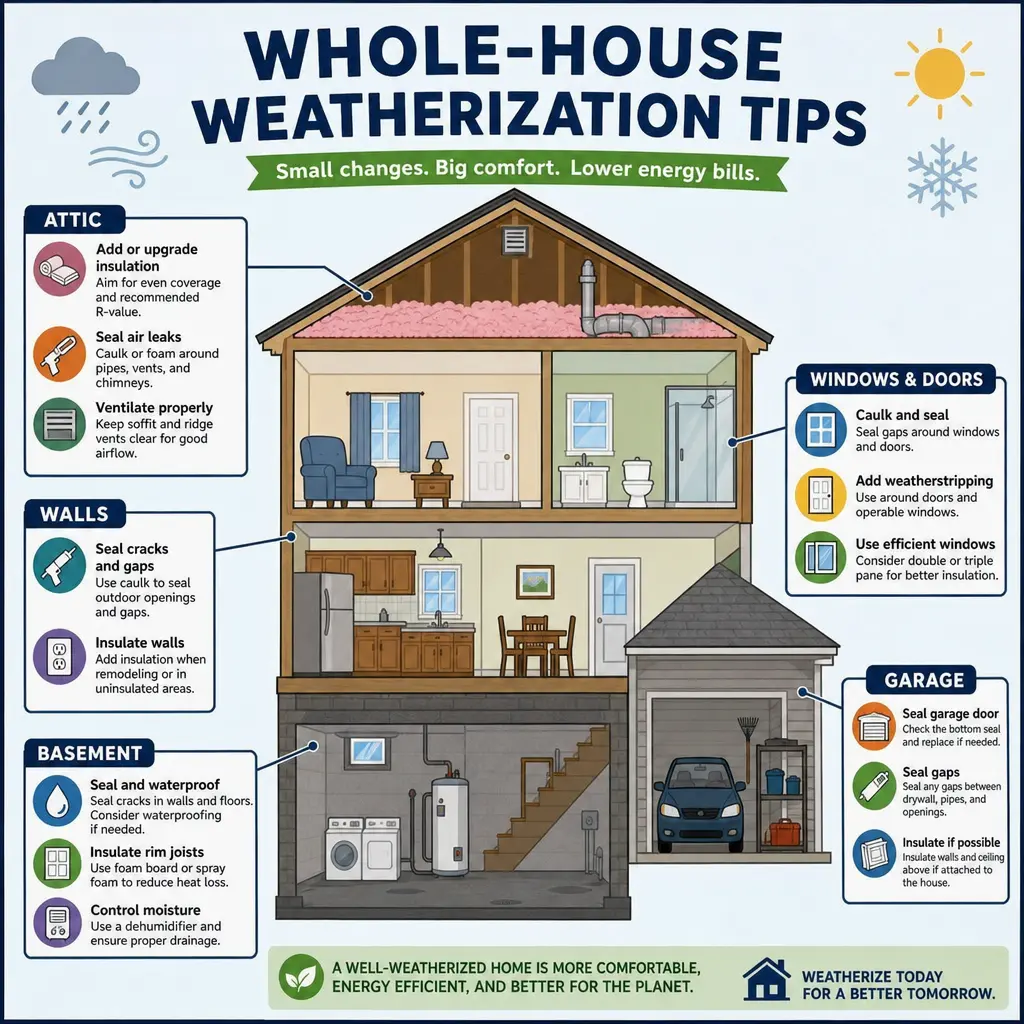
A Whole-Home Approach to Weatherization
Insulating a garage door can improve the garage, but broader household energy performance depends on the entire building enclosure.
Air Sealing
Sealing uncontrolled gaps around windows, plumbing penetrations and exterior doors can reduce drafts that insulation alone does not stop.
Attic Insulation
Air sealing and properly installed attic insulation can reduce heat transfer between the living space and roof or attic area.
Foundation Areas
Rim joists, crawlspaces and basement areas may contribute to drafts and cold floors when they are not properly sealed and insulated.
Maintaining an Insulated Garage Door
Inspecting an insulated garage door regularly can help identify loose materials, damaged seals and changes in door performance.
- Check that insulation panels remain securely attached.
- Look for sagging, moisture staining or torn facing material.
- Keep insulation clear of hinges, rollers and tracks.
- Inspect the bottom and perimeter weather seals.
- Listen for new noises while the door is operating.
- Watch for uneven movement or opener strain.
- Schedule professional service when operation changes.
Insulation should never conceal damaged hinges, cracked panels, loose reinforcement struts or other important garage door components.
Frequently Asked Questions About Garage Door Insulation
Can fiberglass insulation be added to any garage door?
No. The door must have suitable panel cavities, enough clearance for the insulation and hardware capable of handling the added weight. Some doors are better suited to rigid kits or complete replacement.
Does garage door insulation reduce energy bills?
It may help moderate garage temperatures, especially in an attached garage, but actual energy savings vary according to the home, climate, air leakage and insulation in surrounding walls and ceilings.
Is fiberglass better than rigid foam?
Neither material is best for every door. Fiberglass is flexible and affordable, while rigid foam is lightweight and can provide a clean finished surface. Door construction and added weight should guide the selection.
Can insulation make a garage door too heavy?
Yes. Added insulation can change the door's balance and place extra strain on springs and the opener. A professional should inspect the system if the door becomes heavy or difficult to operate.
Should fiberglass insulation be left exposed?
No. Fiberglass should normally be covered with a suitable facing or retention system that protects the material and prevents fibers from becoming exposed inside the garage.
Is an insulated garage door worth replacing an older door?
It may be worthwhile when the existing door is damaged, unbalanced, poorly sealed or nearing the end of its service life. A new insulated door can also improve rigidity, appearance and weather protection.